
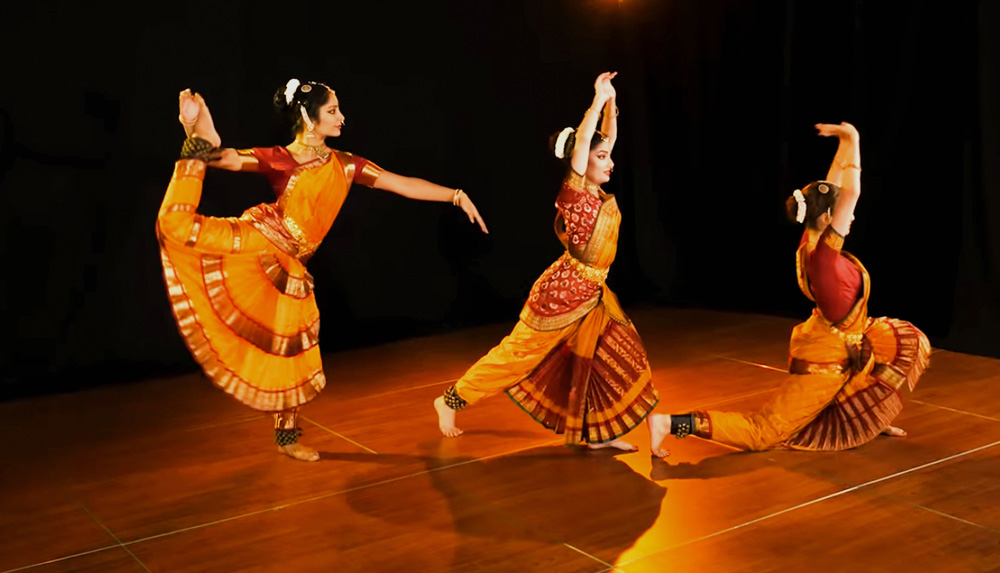
Bharatanatyam is an Indian classical dance that originated in the Hindu temples of Tamil Nadu in southern India. Bharatanatyam dance is a tradition steeped in Indian history and culture.
Today, Bharatanatyam is a dance style that encompasses religious and non-religious themes, as well as fusion styles.
Characterized by precise movements, sharp edges, and expressive body language, this tradition has delighted audiences for generations.
Like many other aspects of Indian tradition, this art form has struggled through times of oppression. However, with the efforts of teachers and students all over the world, Bharatanatyam has been revived to continue to serve the people who find joy in the formal and intuitive expressions embodied in the structure of the dance.
Introduction to Bharatanatyam
Bharatanatyam word was derived by joining two Sanskrit words: ’Natyam’ meaning dance and ’Bharata’ which is a mnemonic containing ’Bha’ (bhava/emotions), ‘Ra’ (raga/melody), and ‘Ta’ (tala/rhythm). Thus the term Bharatanatyam means a dance that expresses Bhava, Raga, and Tala.
History of Bharatanatyam
The history of Bharatanatyam is a testament to the resilience and adaptability of this art form. Bharatanatyam originated from the text Natya Shastra and grew roots in temples with the intent of deepening the religious experience. From its sacred origins in temple rituals to its resurgence as a revered classical dance, Bharatanatyam continues to enchant audiences with its beauty, grace, and profound storytelling. It remains an integral part of India’s cultural heritage, embodying the rich traditions and artistic expressions of the land.