

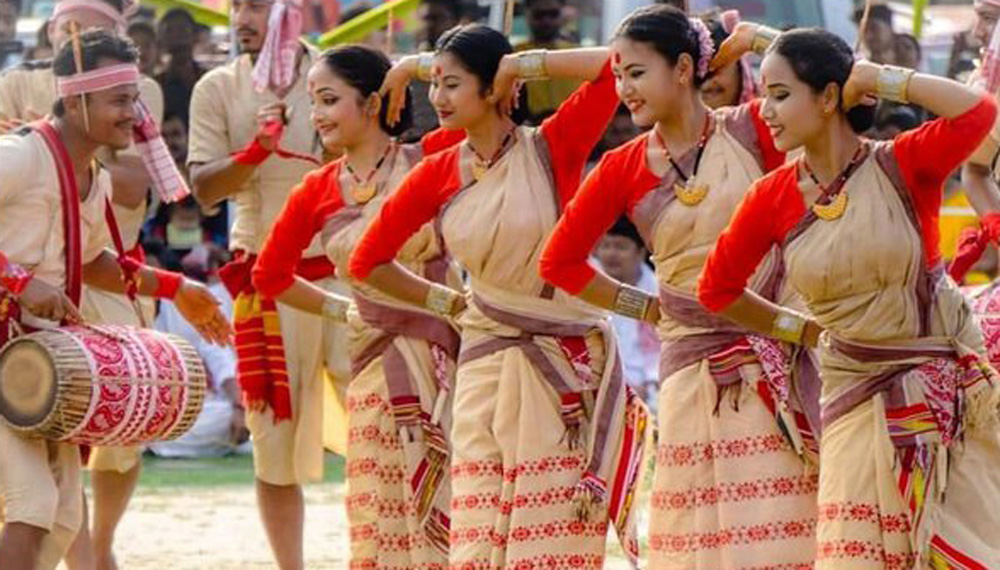
The Bihu Dance is an essential aspect of Assamese tradition and is celebrated with great ceremonies in Assam, a northeastern state of India. This folk dance is linked to the Bihu festivals, which are key events in the Assamese agricultural calendar. The dance has dynamic movements combined with pep and jubilation. A cheerful harmony in the dance illustrates the unity among the participants and the community. This article discusses the essence of Bihu folk Dance, its historical role as well as its contribution to Assamese culture.
What is Bihu Dance?
During the three Bihu festivals, Rongali Bihu, Kongali Bihu, and Bhogali Bihu, this folk dance is performed. The three events each celebrate one phase in agriculture’s different seasons and thus represent different aspects of Assamese society and culture. It is performed with vigorous body movements, colorful costumes, and traditional instruments. Celebrated during the harvest season, the beginning of spring, and the Assamese New Year, this is a festival that unites the different communities in an enthusiastic spirit of cultural heritage.
Types of Bihu Dance
There are three major Bihu festivals wherein the Bihu Dance is performed. The Bihu festivals are significantly different from one another. Of these, the first one is
Rongali Bihu (Bohag Bihu)
Rongali Bihu or Bohag Bihu is celebrated in April. It is the most colorful among the other festivals. It marks the start of Assamese New Year and the season of spring. The Rongali Bihu Dance is full of strength and energy, as it meets the eager expectations regarding the new harvest season. Traditionally dressed performers dance openly while rhythmic sound from instruments like dhol, pepa, and taal provides music.
Kongali Bihu (Kati Bihu)
Kongali Bihu, which is also called Kati Bihu, occurs in October and signifies the conclusion of harvesting season. Kongali Bihu is less lively and colorful as compared to Rongali Bihu. Dance during this festival has slow gracefulness as it reflects harmony with the environment thereby characterizing its true spirit. Rituals and prayers for the well-being and successful crops of the community in the future are the main constituents of Kongali Bihu.
Bhogali Bihu (Magh Bihu)
Bhogali Bihu, which occurs in January, marks the completion of the harvest season by feasting and making merry. Bhogali Bihu Dance is an energetic and celebratory dance that brings out the complete rounded completion of the harvest. The whole community comes together and celebrates this festival by lighting bonfires, sharing traditional feasts, many other customs, and the like, wherein the dance is an essential part of the celebration.