

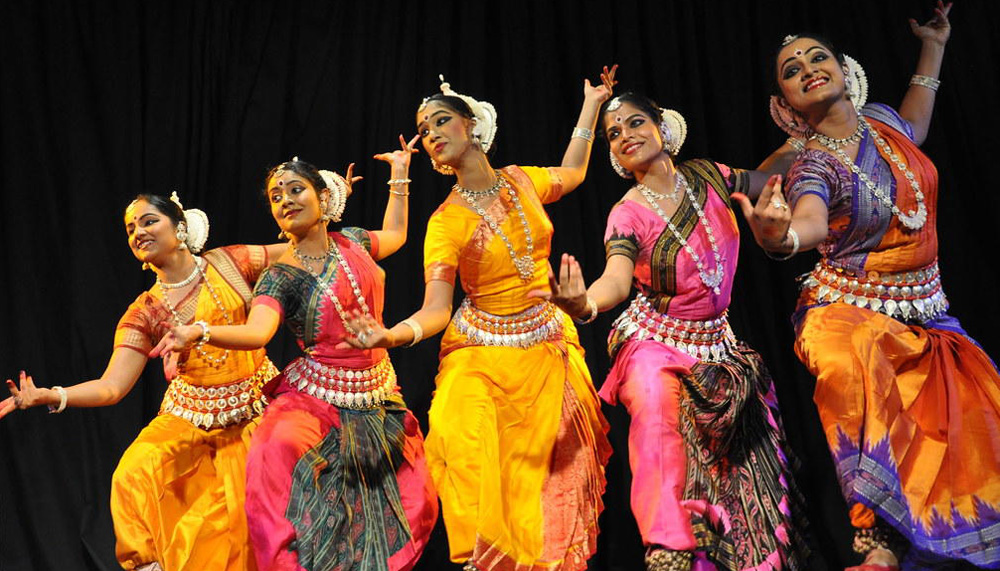
Odissi is one of the ancient dance forms that originated in the temples of Odisha. It is one of the 8 accredited classical dance forms of India. The present-day Odisha – the erstwhile Kalinga of ancient India- located on the eastern coast of India had once been the epicenter of political, social, educational, cultural activities, and architectural innovation. Its testimony can be seen in the temple’s architecture in Odisha. Of its many cultural boasts – one that still shines brightly to this date – is the Odissi dance form.
Odissi dance is marked with graceful postures, emotive facial expressions, bright costumes, and makeup. The dancer uses intricate hand gestures to convey emotions, depict various characters, and tell stories. The versatile footwork complimenting the rhythm and music adds to the fluidity and expressiveness of the dance form.
Odissi was predominantly performed by women who presented stories in the form of dance-dramas in praise of Lord Vishnu. Through the many crests and falls of time, this art form transited from the temples to the dance institutes run by sincere pursuers, practitioners, and teachers who trained their future generations to keep this artform alive, and finally to the world stage – as an emblem of India’s rich cultural heritage.
Legends have it that Lord Jagannatha loved to hear the poetic verses of Jaidev’s Gita Govindam. These verses were sung in front of him in Jagannatha Temple in Puri to please him. Thus the same verses became the musical base for Odissi dance. In addition, Odisha’s classical literature also provided a rich resource for the Odissi dance dramas.