
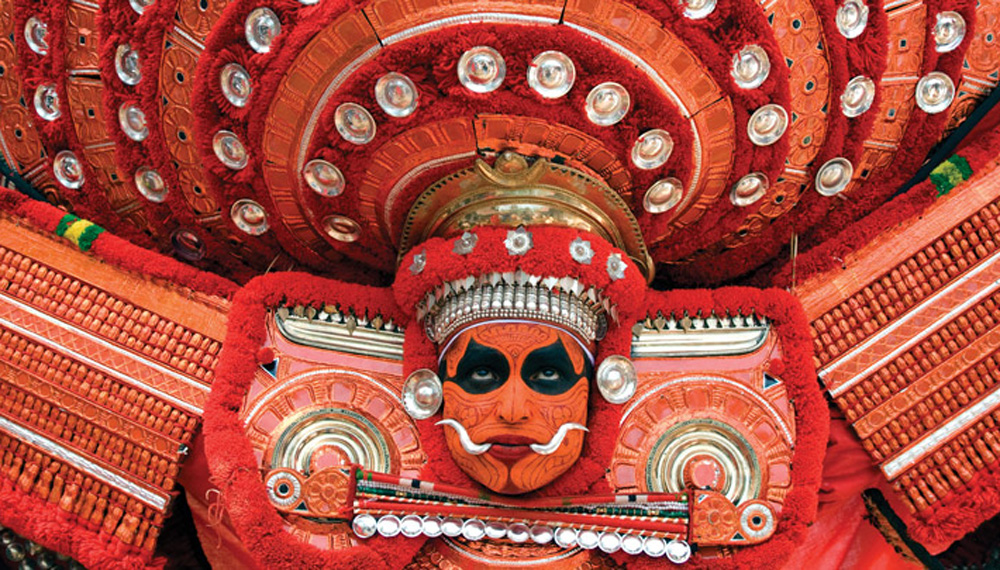
The Theyyam is predominantly performed in North Malabar, including the Kannur district, areas of Kasargod, Wayanad, and the northern regions of the Kozhikode district, as well as some areas of Karnataka state. The primary traditional performers of the Theyyam are from the Malayan and Vannan communities, which are categorized as Scheduled Castes. Although performers also come from other minor communities, these two are considered the chief performers.
Most families and communities in North Malabar have their family deity as a Theyyam. Each village also has a Theyyam as their village god. The Theyyam is performed in houses and temples, either as an annual festival or as a special offering to the deity on particular occasions. There are nearly 400 different Theyyams, categorised as major and minor ones. These performances primarily honour major goddesses and gods, tree gods, mountain gods, warriors, soldiers, and sub-deities such as forest gods (Vana Murtis) and hunting gods (Nayattu Devatha). There are also performances for minor characters such as Pottan (deaf and dumb) and Muthala (crocodile). Some of the major Theyyams include Muchilottu Bhagavathy (representing Goddess Kali), Kathivannur Veeran, Uchila, Karim Chamundi, and Muthappan. Alongside Hindu deities and characters, the Theyyam also incorporates various Muslim characters like Bappiriyan Theyyam, Ummachi Theyyam and Aalibhootham which shows the inter cultural acceptance and development of the art-form, as it transcends religious differences.
The Theyyam season starts from the tenth day of the Malayalam month of Thulaam (usually mid-October) and lasts until the middle of Edavam month (typically late May).