
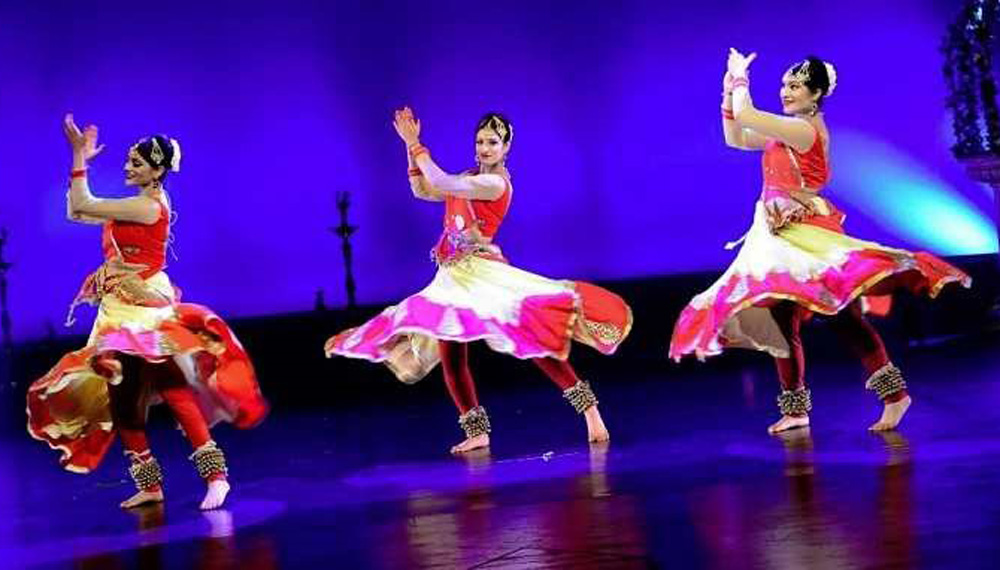
Kathak is a classical Indian dance form known for its storytelling through rhythmic footwork, facial expressions, and graceful movements. Kathak dance has a traditional and cultural heritage that gives it the status of the Indian classical dance form. The technical and aesthetic aspects associated with Kathak have been passed onto generations verbally as an oral tradition. Like the majority of the art forms of India, Kathak thrives on the Guru-Shishya Parampara or the teacher-disciple tradition.
Kathak dance originated from Uttar Pradesh (U.P.), a state in North India. Studies suggest that Kathak originated in Varanasi and this dance form traveled through Lucknow, Jaipur, and other parts of North India and North-West India. The term Kathak is derived from the vedic sanskrit word ‘Katha’ which means “story”, and ‘Kathakar’ which means “the one who tells a story”. Wandering Kathakars or the traveling bards conveyed tales, inspired by our ancient epics and mythologies, through dance, songs, and music.
Kathak performers exhibit stories through graceful hand movements, extensive footwork, flexible body movements, and most importantly intense facial expressions capable of evoking a range of emotions.
he Lucknow tradition of Kathak believes that Lord Krishna appeared in the dream of his devotee, named Ishwari. He instructed her to develop dance as a form of worship, in her dream. Ishwari developed Kathak as a dance form and through her descendants preserved the learning and development, yielding the Lucknow Gharana of Kathak.
Kathak evolved as an expression of devotion towards Lord Krishna. Lord Krishna is considered the ‘God of Kathak’. Kathak in the Bhakti movement era revolved around the theme which portrayed the immortal love between Radha, Krishna, and the milkmaids (Gopis). The dance form’s roots can be traced to the Bhakti movement, which was heavily influenced by Krishna’s teachings.