
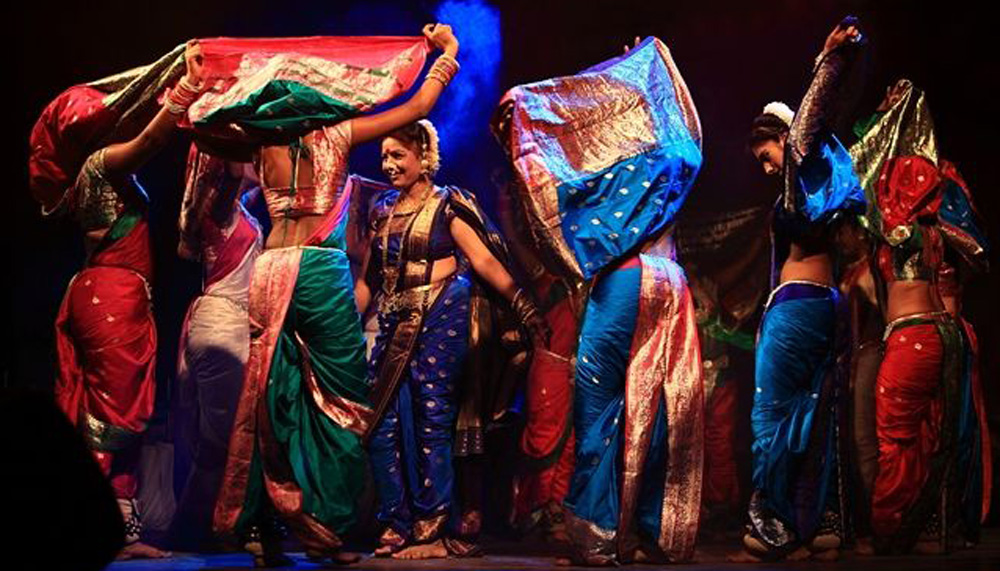
Lavani is a dance form that stands out for its electrifying energy and sensual grace. Derived from the Marathi word “lavanya,” meaning beauty, Lavani is a traditional folk dance that originated in Maharashtra. It has continued to enthral audiences since about the 16th century, spreading throughout the country and especially gaining popularity in the neighbouring regions of Madhya Pradesh, Gujrat, and along the Konkan coast. The art form is known for its infectious fast-paced beats, a combination of traditional instruments like the dholki, harmonium, and tabla. Another hallmark of the art form is the dancers’ nine-yard saree, the nauvari. The dance form has a tumultuous history behind it, receiving strong royal patronage once to now being marginalised and underrepresented. How did this happen and why?
Lavani has different sub-genres and types, each with its distinct characteristics. The Shringarik Lavani, perhaps the most widely known form celebrates love, romance, and sensuality through its flirtatious movements and lyrics. The Nirguni Lavani has philosophical undertones, emphasising introspection and the concept of the formless divine. Another classification is along the lines of the type of performance: the Fadachi Lavani and the Baithakachi Lavani. As the name suggests, the latter is a half-seated, semiotic performance for closed audiences, while the former is a theatrical performance for the masses.
The Baithakachi Lavani received heavy patronage from Maratha rulers such as Peshwas Sawai Madhavrao (1775-1795) and Bajirao II (1795-1818). Alongside royal patronage, Lavani would go on to be integrated into the tamasha in the 1870s, the popular travelling folk theatre. Beginning from elite bureaucratic circles, Lavani was gradually produced and disseminated into varied social settings and among the wider Marathi-speaking populace.